 The Distilled
R: the FVG retest
The entry: which gap, what counts as a tap, why the trigger is a close back out, where the stop goes, and the ways a retest fails before it starts.
Which gap
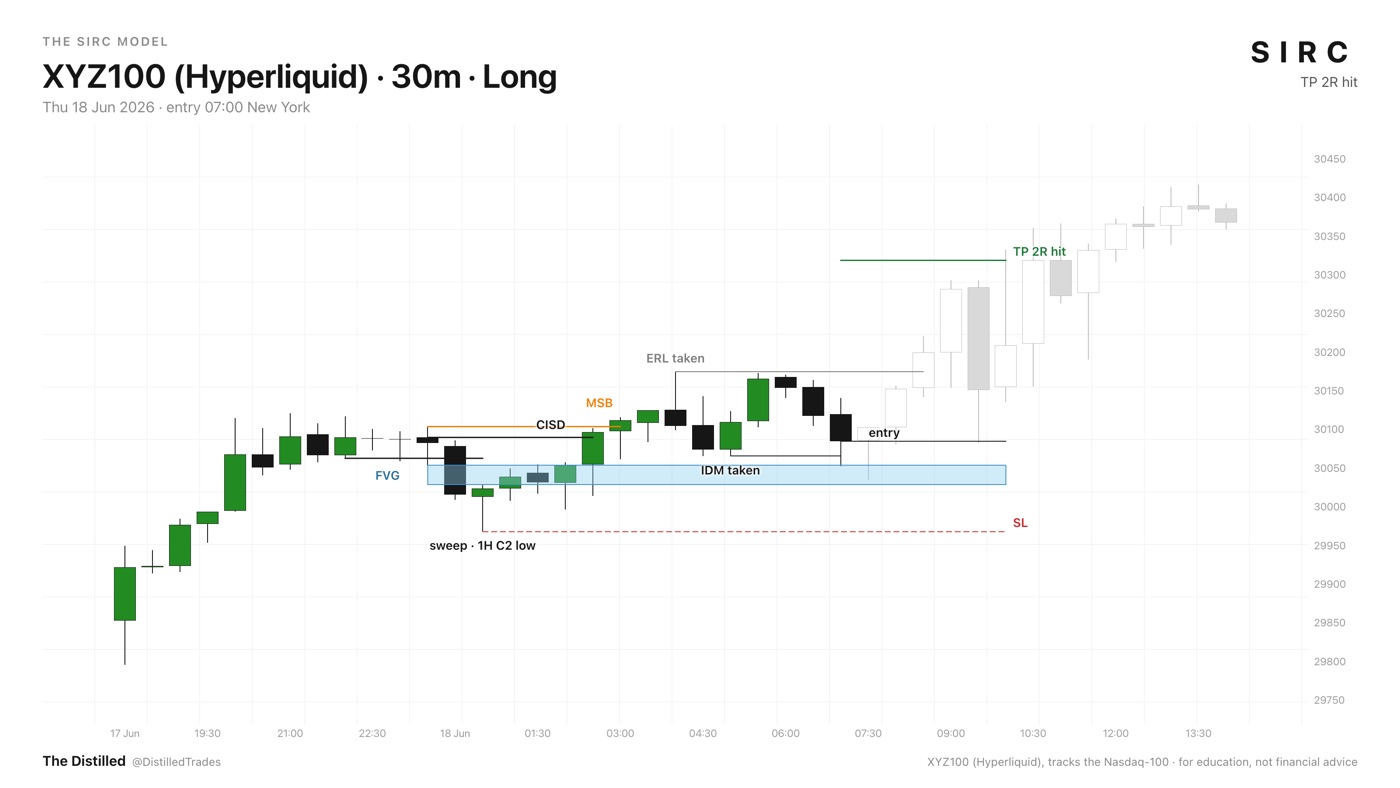
The gap is the FVG the move left behind, beyond the IDM. On a long, that means below the IDM: price has to take the obvious higher low and keep going into the gap underneath it. On the 18 June chart, it is a gap the sweep leg left on its way down, just above the sweep's low, which the move back up then closed through.
If there are several gaps, the one that matters is the one price actually reaches after the IDM is taken. Do not choose a gap after the fact because price happened to turn there. Mark the candidates when they form, dashed, and let the chart show you which one gets tapped.
Because the gap sits beyond the IDM, price cannot reach it without taking the IDM first. That is the geometry that ties the I and the R together: the run that takes the obvious stops is the same run that brings price to the gap. Once the IDM has gone, you are watching three prices: the near edge of the gap, its far edge and the sweep's wick.
A tap, then a close back out
The retest has two parts. The tap: price trades back into the gap. The trigger: a candle closes back out of the gap on the continuation side. On a long, that is a close back above the top of the gap. The entry is that close, and it can come on the same candle as the tap.
No close back out, no trade. A tap on its own tells you price has arrived, not that anyone is defending the gap. Plenty of taps turn into closes straight through the far side, which is a failed gap, and the idea is then in trouble well before the stop.
It is the same standard as every other stage: a wick is an attempt and a close is the event. Wait for the candle to finish, even when it looks certain to close back out.
The stop stays at the sweep
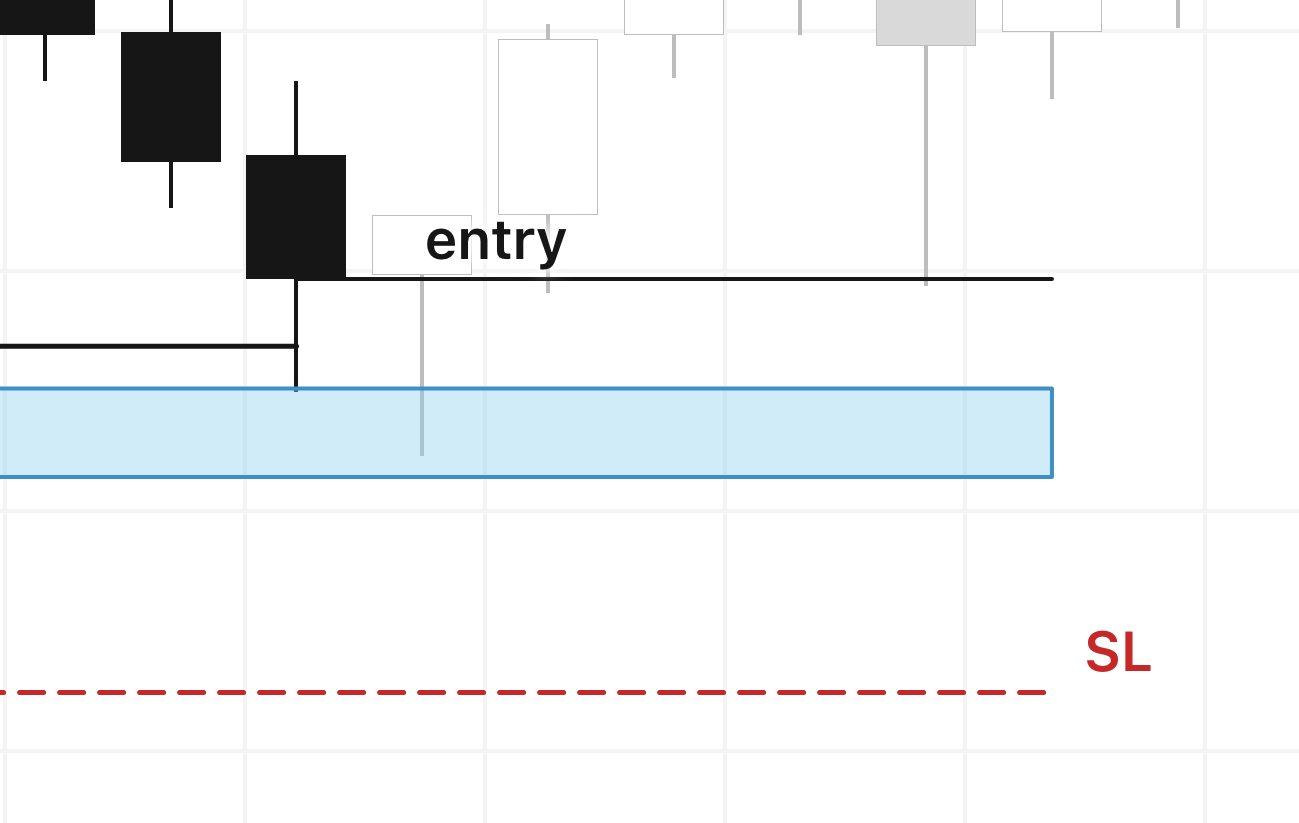
The stop goes beyond the sweep's wick, with a small allowance for the spread and the odd tick of overshoot. It does not go under the gap, and it does not go under the IDM. The idea you are trading is the sweep: if price trades back through that wick, the whole read is wrong.
On the 3-minute long from 16 September 2026 (lesson 8), the gap ran from 29,043 to 29,047, the entry close was 29,049 and the stop 29,026, beyond the sweep's low: 23 points of risk. A stop just under the gap, at about 29,041, would have been taken on the very next candle, which traded down to 29,036. The stop at the sweep held by a single point on the candle after that, and 2R was hit three hours later.
This is also why the retest makes the risk smaller. The stop has not moved; the entry has come closer to it. Size is then worked out from that distance, as lesson 14 shows, so a smaller risk in points means a larger position for the same money at risk, not more money at risk.
When there is no retest
A retest can fail before it starts. The setup is dead if the sweep's wick trades before the entry. If price closes through the far side of the gap and keeps going, the gap has failed and there was never an entry. And sometimes price takes the IDM, never reaches the gap and leaves without you.
None of those are losses. They are the cost of waiting for a specific entry. Log them anyway, so you can see how often the retest never came.
Once you are in, the plan is fixed: stop at the sweep, target 2R. The gap you entered from does not move the stop closer, and it does not raise the odds. At 2R, a market with no edge hits the target about 1 time in 3.
- The gap is the FVG the move left, beyond the IDM.
- The trigger is a close back out of the gap on the continuation side. No close, no trade.
- The stop stays beyond the sweep's wick. The retest shrinks the risk by moving the entry, not the stop.
- If the sweep's wick trades before the entry, the setup is dead.
- A retest does not raise the odds: at 2R, about 1 in 3.
Go back through the SIRC setups you have marked. For each one, write down the gap you had marked before price reached it, whether price tapped it, whether a candle closed back out, and the risk in points from that close to the sweep's wick. Compare that risk with the risk from the CISD-break entry on the same setup.
Related on the site
Education only, not financial advice.